


Selecting a pistol sight involves more than just picking a device with an extensive feature set or an attractive design. One of the most crucial things that customers should know before placing an order is pistol sight compatibility. Even when two goods seem extremely similar, a sight made for one firearm platform, mounting arrangement, or specification might not be appropriate for another.
Knowing compatibility can greatly simplify the purchasing process for those looking at Delta 1 items. With a product philosophy centered on an open sight image, streamlined construction, and an anti-snag profile, Delta 1 offers fixed and completely adjustable sight designs designed for particular handgun platforms. Instead of thinking that one sight will fit every handgun, consumers should always consider the specific model because various items can have varied characteristics.
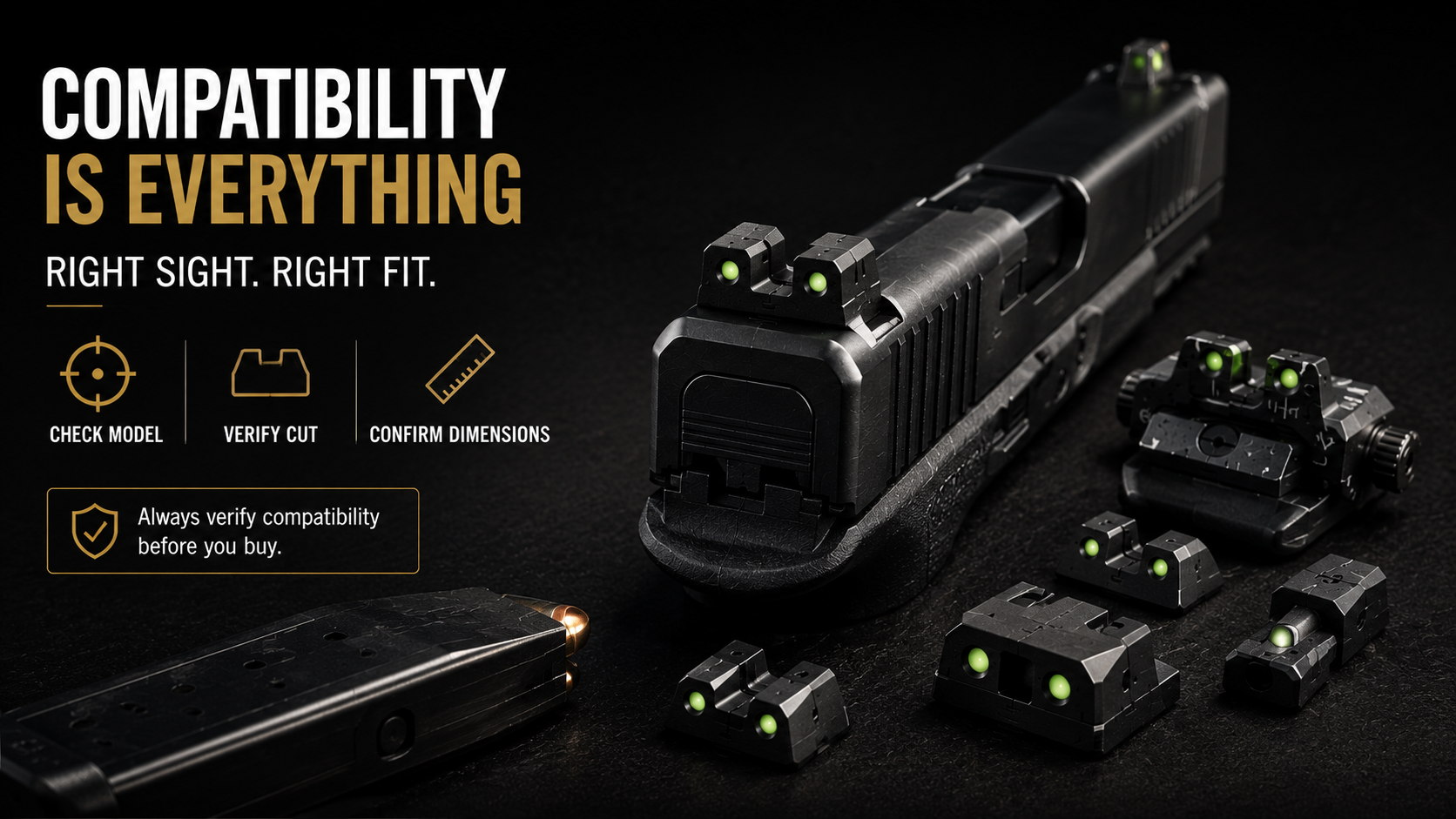
The main variables that can affect pistol sight compatibility are discussed in this guide, along with what consumers should look for before making a purchase, the significance of manufacturer criteria, and how to make better choices when looking for contemporary pistol sights.
What Does Pistol Sight Compatibility Mean?
The term “pistol sight compatibility” describes whether a certain sight is made to function with a particular kind of firearm and its matching sight configuration.
The sight’s physical size, mounting location, firearm model, sight cut, configuration, and manufacturer specifications are some of the variables that may be involved.
If a product is incompatible with the intended firearm, it can be of excellent quality yet still be inappropriate.
Because of this, compatibility should be examined before taking into account secondary variables like look, cost, or extra features.
Because customers cannot physically examine every dimension before making a purchase, the product description and manufacturer documentation are particularly crucial for online buyers.
Why Compatibility Should Be Your First Consideration
It can be tempting to start comparing materials, styles, coatings, or other aspects when purchasing handgun sights.
But compatibility is the most important factor.
A sight’s other features become meaningless if it is not made for the specified firearm platform.
Therefore, the first step in a prudent purchasing procedure is to determine the precise type of firearm and then search for products that are either advertised as compatible with that platform or especially built to work with it.
This strategy can assist cut down on inappropriate purchases and improve the efficiency of the shopping experience.
Additionally, it enables consumers to compare products based on relevant information.
Pistol Models Can Have Different Sight Configurations
The fact that different handgun models are not always constructed around the same sight settings is one of the reasons compatibility can become problematic.
Dimensions, mounting configurations, sight cuts, and product specs might vary throughout manufacturers and firearm systems.
Sometimes rigorous inspection is necessary even for variants within the same larger family of firearms.
Because of this, consumers shouldn’t presume that a sight made for one handgun will fit another.
Before placing a purchase, you should always check the precise product listing.
Understanding Sight Cuts
The exact interface or arrangement used to put a sight on a handgun is referred to as a “sight cut” in general.
Compatibility may be directly impacted by the sight cuts used by various guns.
Product descriptions may indicate a specific platform or cut for this purpose.
Delta 1, for instance, sells items related to certain configurations, such as models built around particular handgun platforms and a fully adjustable sight intended for a Novak-style cut. To find out if a certain model matches their rifle, buyers can consult the manufacturer’s product information.
The crucial point is straightforward: you should never assume compatibility based only on looks.
Fixed Sight Compatibility
Even though the design of fixed sights is somewhat simple, rigorous compatibility study is still necessary.
The proportions, mounting arrangement, profile, and other features of a fixed sight can vary.
Fixed-sight items from Delta 1 are not marketed as being generally interchangeable; instead, they are made for certain rifle systems.
When contemplating a fixed sight, consumers should determine the precise model of their rifle and compare it with the compatibility details provided by the manufacturer.
Before making a purchase, it is preferable to get clarification if the product listing does not make compatibility obvious.
Fully Adjustable Sight Compatibility
Another level of thought is added by fully adjustable sights.
An adjustable sight may have additional mechanical components that need particular dimensions and configurations in addition to the standard mounting requirements.
Customers should therefore carefully read each product’s specifications.
The fully adjustable sight solutions offered by Delta 1 are tailored to certain combinations. Therefore, instead of assuming that every adjustable sight uses the same mounting mechanism, buyers should check the specific model and its claimed compatibility.
Professional assistance could be necessary when technical fitting is needed.
Why Product Photos Are Not Enough
Product photography is helpful for comprehending appearance, but it shouldn’t be regarded as information on technical compatibility.
Despite having varied size or mounting arrangements, two sights can appear almost identical in a picture.
Similarly, a sight may appear to fit on a specific handgun but still need to be configured differently.
Product photos should therefore be regarded as supplemental information.
When assessing compatibility, the manufacturer’s requirements should continue to be the major source of information.
Dimensions Matter
Sight compatibility can be significantly influenced by physical dimensions.
Measurements pertaining to breadth, height, length, mounting arrangement, and other physical attributes may be included in specifications, depending on the product.
Instead than judging measures from photos, customers should compare written specifications.
When working with model-specific components, even a minor dimensional change can be significant.
Before making a purchase, consumers should get in touch with the manufacturer or store if the product’s dimensions are unclear.
Platform-Specific Products
A lot of contemporary pistol sights are made for certain gun systems.
This is advantageous since it provides clients with more precise information regarding planned compatibility.
But it also implies that consumers must focus on the precise product category.
It is not always a given that a sight listed for one platform will function on another.
Customers should start their online shopping by selecting the firearm model and then the matching sight category.
This method is far more dependable than beginning with a general search for “pistol sights.”
Understanding Manufacturer Specifications
One of the most useful resources for compatibility research is manufacturer specs.
They may offer details on compatible models, measurements, structure, mounting configurations, installation specifications, and other pertinent features.
Before placing an order, customers should carefully review these parameters.
Customers should ask for clarification if information from manufacturer documentation and a shop listing seems contradictory.
Making a choice based on verified facts rather than conjecture is the aim.
Compatibility and Delta 1 Sight Designs
A variety of sight products with various configurations and uses have been created by Delta
The company’s product philosophy places a strong emphasis on anti-snag features, streamlined design, an open sight image, and a simplified sighting idea. Additionally, it provides both fully adjustable and fixed goods.
Although these elements are crucial to comprehend, compatibility testing is still necessary.
The desired firearm model and configuration should always be compared to the exact product.
This is especially crucial as a product line may include several models made for several platforms.
Understanding Anti-Snag Design
As part of its product strategy, Delta 1 emphasizes an anti-snag design.
One physical design element that can set one sight apart from another is a streamlined profile.
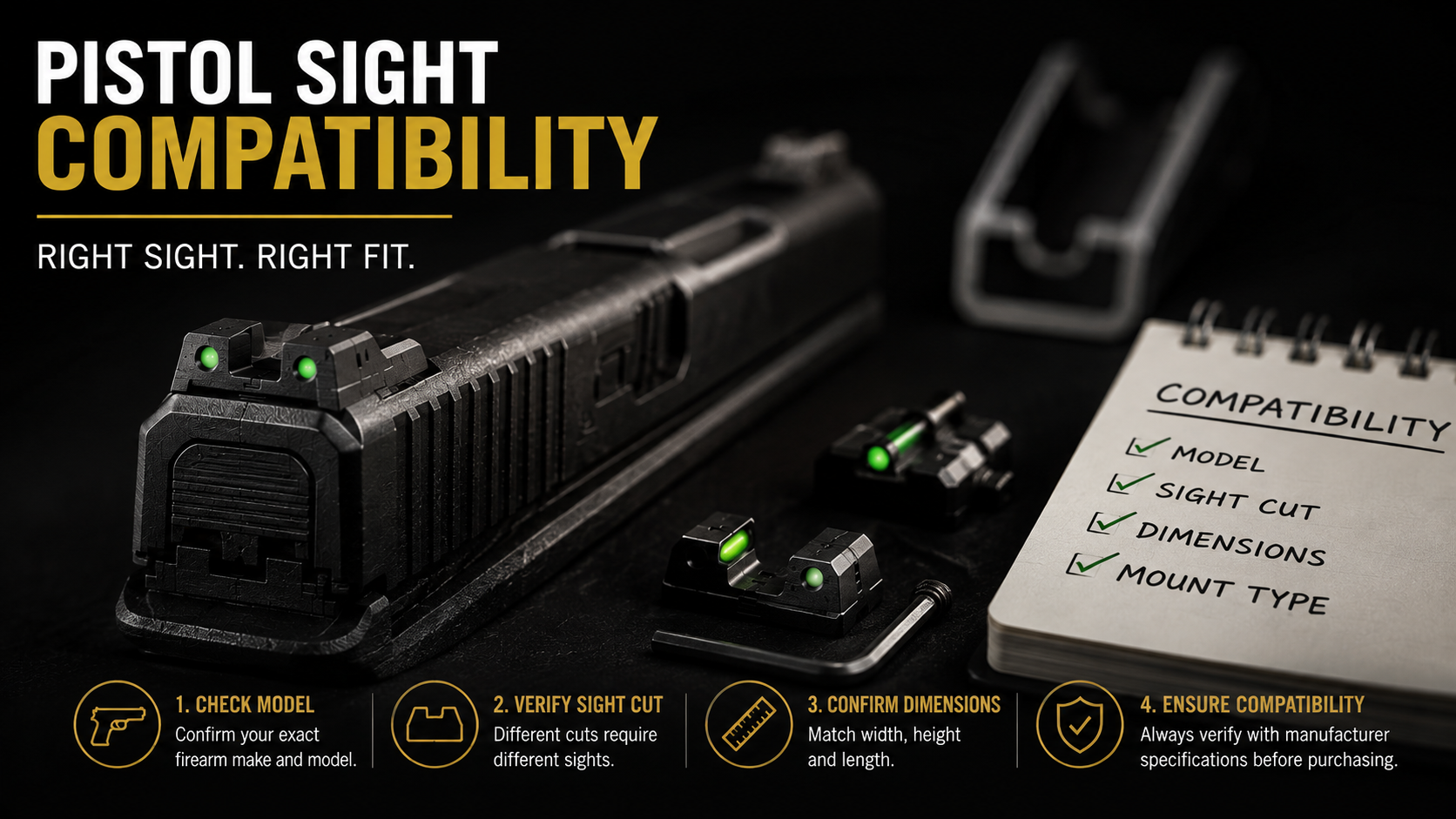
This aspect should be taken into account by consumers together with compatibility, dimensions, construction, and intended use.
Even with a sleek or appealing design, a sight may not be appropriate for a certain handgun.
Consequently, compatibility verification should never be replaced by the anti-snag feature.
Open Sight Picture and Compatibility
Another feature connected to the design philosophy of Delta 1 is the open sight picture.
In order to give a unique sight picture, the company bases its description of its sight system on a simplified visual concept.
However, a product’s compatibility with a certain rifle cannot be determined by the sight picture alone.
Physical compatibility and sight-picture design should be viewed independently by buyers.
Make sure the product is made for the right platform first. Next, determine whether the other features of the product are suitable for the intended use.
Materials and Compatibility
Although a sight’s architecture and features can be influenced by the choice of material, compatibility cannot be determined only by material.
It is still necessary for a steel, aluminum, polymer, or combination-material sight to fit the specific handgun configuration.
This is a crucial distinction since consumers occasionally choose material quality over mounting specs.
It is nevertheless inappropriate to buy a high-quality item that does not match the rifle.
Fixed vs. Adjustable Compatibility
Customers should be aware that there may be differences in compatibility requirements between fully adjustable and fixed sights.
For a given firearm platform, a fixed sight may employ a particular configuration.
Additional mechanical issues may be introduced by an adjustable sight.
As a result, consumers shouldn’t think that moving from a fixed to an adjustable sight only requires selecting a different model.
It is important to verify the precise product specifications.
Compatibility and Professional Installation
Technical installation or fitting may be necessary for certain handgun sight devices.
Clients who are not accustomed with installing firearms should think about hiring a trained specialist.
This is particularly important when a sight has technical fitting or installation requirements.
You should always adhere to the manufacturer’s directions.
Consumers should refrain from doing novel technical tasks or making unsupported changes based only on general internet recommendations.
When a buyer is unsure if a particular product is suitable for a specific firearm configuration, expert assistance can also be helpful.
How to Check Compatibility Before Buying
It doesn’t have to be difficult to do a responsible compatibility check.
Determine the precise model of the firearm first.
Next, find the product listing for the sight under consideration from the manufacturer.
Examine the systems and settings that are indicated as compatible.
Examine measurements and more technical details after that.
Lastly, before placing the order, get any questions answered.
Numerous typical internet buying errors can be avoided using this procedure.
Common Compatibility Mistakes Buyers Make
Rather than a lack of information, assumptions are the root cause of many compatibility issues.
Assuming that sights from the same broad type are interchangeable is one typical error.
Another is depending only on pictures.
Additionally, consumers could not read the entire product description or fail to notice minor variations across firearm types.
Buying a product before determining whether technical fitting is necessary is another problem.
Slowing down the purchasing process and double-checking the pertinent information are the first steps in avoiding these errors.
A Practical Compatibility Checklist
Before purchasing a pistol sight, buyers should review the following:
- Verify the precise model and manufacturer of the handgun.
- Verify the particular sight model and the platforms that are mentioned as compatible with it.
- Examine the mounting configuration or sight-cut details.
- When appropriate, compare documented dimensions.
- Find out if the product is fully adjustable or fixed.
- Examine the product description and supporting materials provided by the manufacturer.
- Verify the return and warranty details.
- When technical fitting or installation is necessary, seek professional help.
- Before making a purchase, confirm any applicable legal requirements.
Taking a few extra minutes to verify these details can make online shopping considerably more straightforward.
Why Return Policies Matter
When purchasing technical equipment, even cautious consumers may occasionally run into ambiguity.
For this reason, having a clear return policy can be helpful.
Before making a purchase, customers should check the retailer’s return policies, particularly for items where compatibility is crucial.
But compatibility research shouldn’t be replaced by a return policy.
Whenever feasible, it is recommended to check the product before placing an order.
Reading Customer Reviews Correctly
Although they should be carefully read, customer evaluations might offer helpful information about an accessory.
It’s possible that a client is utilizing a different model or configuration of firearm than the one under consideration.
Although a review can offer broad product impressions, it shouldn’t be regarded as evidence of technical compatibility.
For figuring out whether a product is made for a given firearm, manufacturer specs are still more relevant.
The best use for reviews is as more information.
Warranty and Manufacturer Support
When looking into compatibility, manufacturer support might be especially helpful.
Customers may be able to get clarification from the manufacturer or retailer if a technical question is not adequately addressed in a product listing.
Additionally, warranty information can offer helpful information about post-purchase product support.
Purchase records, product paperwork, and warranty details should be kept by customers.
If a query or problem later comes up, these resources may be useful.
Quality and Compatibility Work Together
Compatibility and quality are distinct yet equally significant factors.
It is possible for a well-made product to be incompatible with a specific rifle.
Similarly, a product may be compatible but fall short of the customer’s expectations in terms of design or construction.
This implies that consumers should consider both aspects while making a purchase.
Make sure the product is suitable for the firearm first.
Next, evaluate the design features, construction, materials, warranty, and intended application.
Responsible Product Selection
Documented information should serve as the foundation for a smart purchase decision.
Consumers should refrain from selecting goods based only on popularity, look, or marketing claims.
Rather, they should determine the true need, verify compatibility, comprehend the features of the product, and go over any relevant criteria.
This strategy encourages a more deliberate online shopping experience.
Additionally, it lessens the likelihood of making unneeded or inappropriate purchases.
Maintenance After Purchase
After the purchase, compatibility is still crucial.
As advised by the manufacturer, owners should take care of their attachments.
Identifying obvious damage, corrosion, excessive wear, or other problems can be facilitated by routinely checking the state of the product.
A professional assessment could be necessary if an accessory looks damaged or dubious.
Unsupported fixes or alterations should be avoided by customers.
Legal and Regulatory Considerations
Laws pertaining to firearms differ between states and are subject to change.
Ownership of firearms, attachments, purchases, storage, transit, and other actions may all be subject to requirements.
Before acquiring or owning firearm-related products, consumers should confirm current regulations with the relevant official sources.
A product’s retail availability does not guaranty that it is lawful for every consumer or jurisdiction.
A knowledgeable legal professional or the appropriate authority should be consulted by anyone unsure about applicable requirements.
Final Thoughts
One of the most crucial things to do while looking for a new sight is to understand pistol sight compatibility. Individual goods may be made for certain firearm platforms or mounting configurations, and fixed and fully adjustable designs may have varying specs.
The company’s unique approach, which includes fixed and fully adjustable options, an open sight-picture idea, streamlined construction, and anti-snag design, offers various features worth investigating for buyers looking at Delta 1 items. But these characteristics should always be weighed against the most important query: Is the particular sight made for the desired firearm?
Before making a purchase, consumers should confirm the precise type of firearm, go over manufacturer compatibility information, look over dimensions and configuration details, and seek expert help if technical fitting is required.
Additionally, it is crucial to keep in mind that legal eligibility is not determined by product availability. It is the responsibility of customers to comprehend local rules and regulations.
Finding an appealing product is only one aspect of making an informed purchase. It entails comprehending the goods, confirming compatibility, examining trustworthy specs, and choosing equipment sensibly.
Before placing an order, anyone comparing contemporary pistol sights should take the time to learn about compatibility. This will make the entire purchasing process more organized, confident, and knowledgeable.
Frequently Asked Questions
What does compatibility with a pistol sight mean?
The term “pistol sight compatibility” describes whether a given sight is made to function with a particular model and setup of firearm. Dimensions, mounting configurations, sight cuts, and manufacturer specifications may all be involved.
Is it possible for any pistol sight to fit any pistol?
No. Sight size and setups might vary depending on the type of rifle. Before making a purchase, buyers should always confirm compatibility.
Are adjustable sights more difficult to match than fixed sights?
Not always. Model-specific criteria may apply to both fixed and adjustable sights. Regardless of the type of sight, customers should verify the precise product specs.
How can I find out if a Delta 1 sight is compatible?
Compare the compatibility details for the particular Delta 1 product with the precise firearm model. Get in touch with the manufacturer or a trained expert if anything is still unclear.
Can I use a product photo to check compatibility?
No. Product photos do not prove technical compatibility; they only depict look. Instead, use the manufacturer’s specifications.
What makes dimensions crucial?
A sight’s compatibility with a specific rifle configuration can be ascertained by its dimensions. Instead of on visual estimates, customers should rely on recorded measurements.
A sight cut: what is it?
The particular interface or setup used to mount a sight to a gun is called a sight cut. Sight-cut configurations might vary depending on the rifle platform.
Does compatibility change with an anti-snag design?
An anti-snag profile does not determine compatibility; rather, it specifies the actual layout of a sight. Customers still need to confirm the precise rifle and mounting setup.
Does compatibility depend on sight material?
No. Construction qualities are described by materials like steel, aluminum, or polymer. The particular design, measurements, mounting arrangement, and firearm platform all affect compatibility.
Do I need a sight installed by a professional?
It is wise to speak with a qualified expert if installation or fitting calls for technical weapon knowledge. You should always adhere to the manufacturer’s directions.
Are there any legal restrictions on pistol sights?
Each jurisdiction has different requirements. Before acquiring or owning accessories related to firearms, consumers should confirm the most recent laws and regulations.
