


Although a high-quality handgun sight is made to last, it may be kept in good shape over time with the right maintenance and routine inspections. Knowing basic maintenance procedures is crucial to proper gun ownership, regardless of whether you use a fully adjustable or fixed handgun sight.
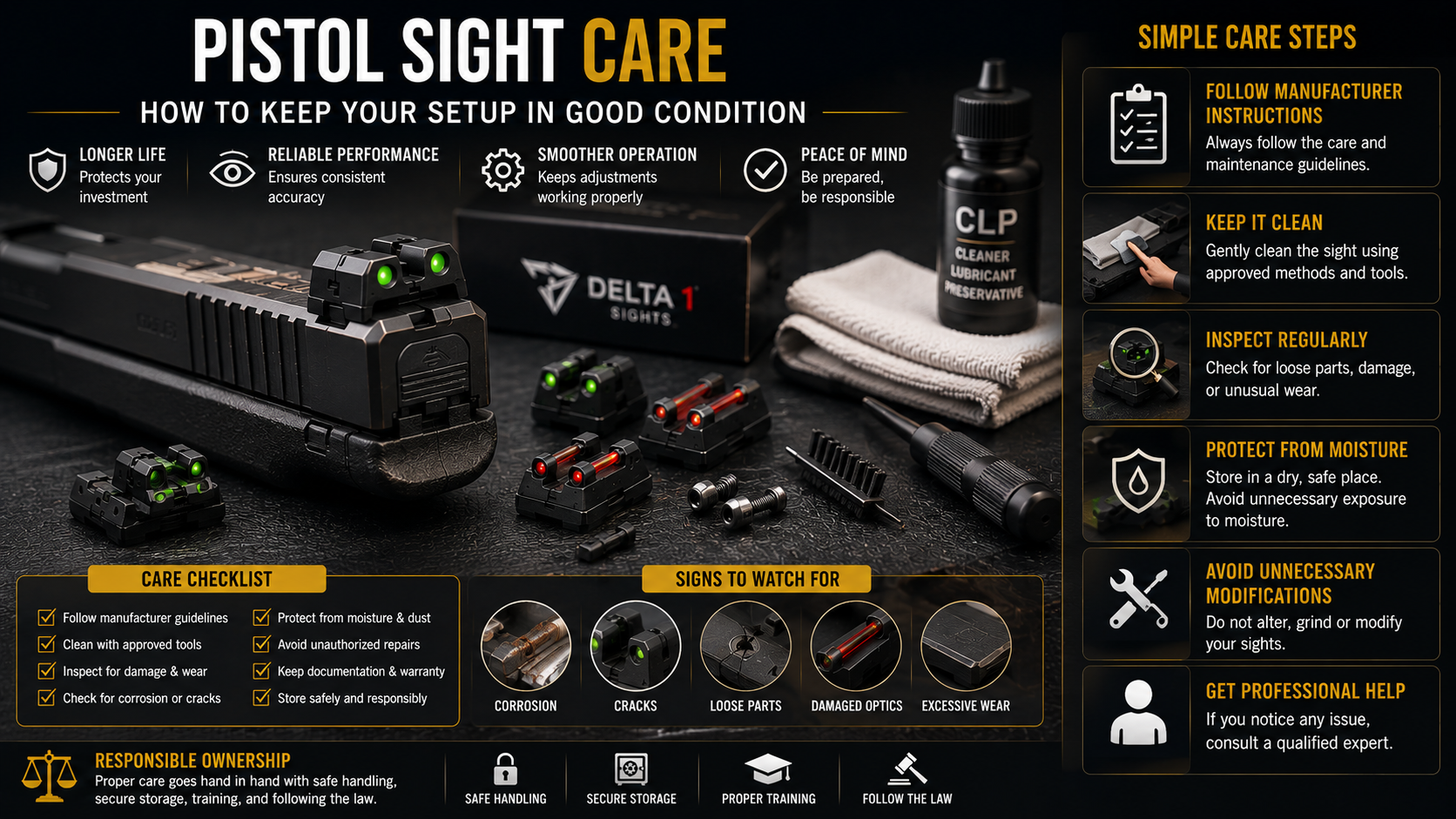
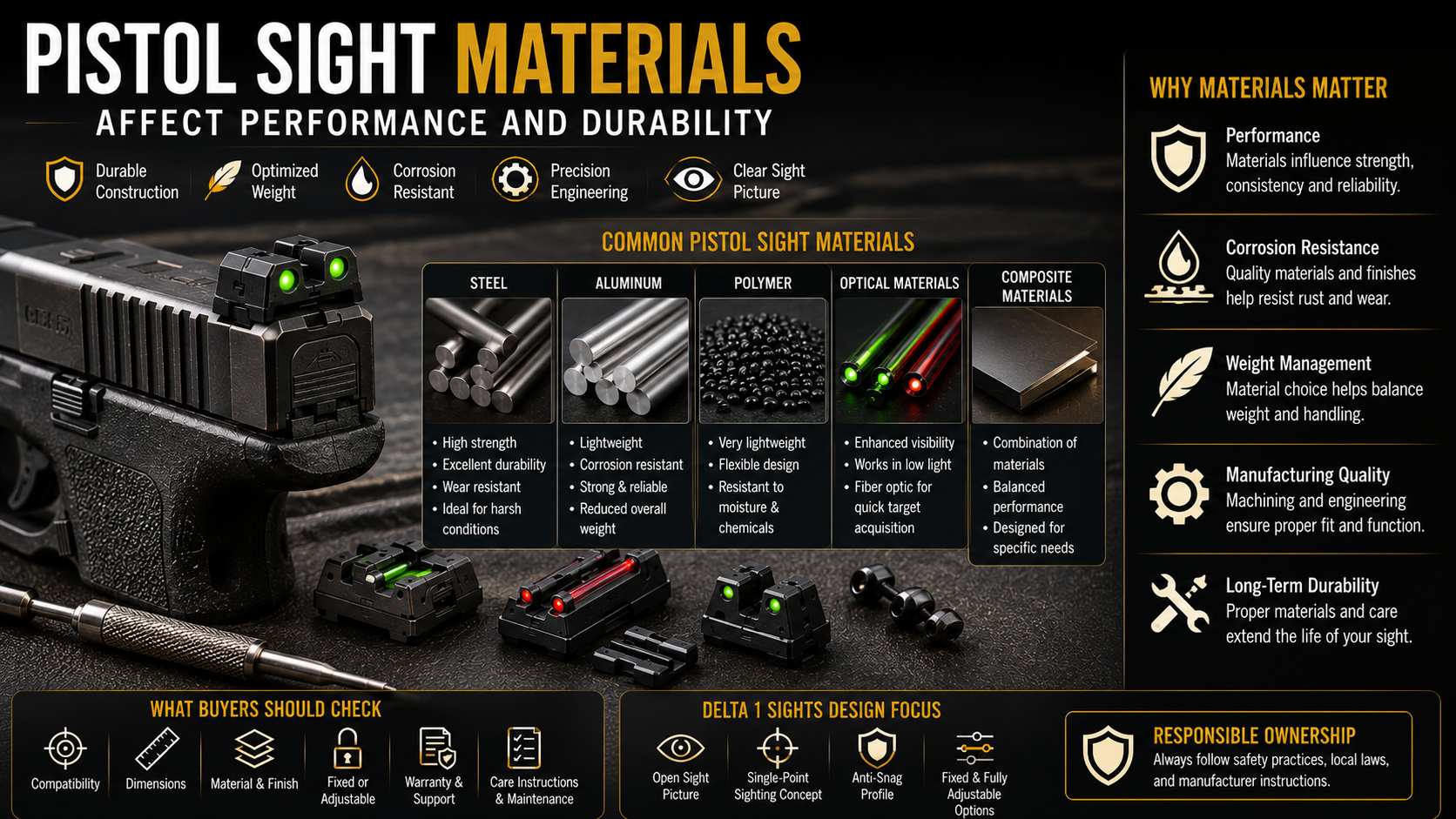
Metal construction, protective coatings, optical components, and adjustment parts can all be found in contemporary sight designs. The manufacturer’s instructions should always be the main source of information because every device may have unique maintenance needs.
Customers looking at contemporary sight systems, like Delta 1 Sights, may also preserve the accessory’s quality and appeal by knowing how to take care of it.
Why Pistol Sight Care Matters
Pistol sights may be subjected to handling, storage conditions, moisture, dust, grime, and other environmental elements. These circumstances could eventually have an impact on other components or the surface finish.
Owners can find obvious problems before they become more serious ones by conducting routine inspections.
Therefore, maintenance should be a regular part of equipment management rather than something that is only taken into consideration when an issue arises.
Follow the Manufacturer’s Instructions
The most crucial guideline is straightforward: adhere to the care recommendations provided by the manufacturer.
A cleaning technique that works for one product might not work for another because different pistol sights can use different materials and finishes.
Examine the manufacturer’s instructions before using any cleaning solution or maintenance technique.
For product-specific care requirements, consumers should consult the pertinent product information and manufacturer guidelines for Delta 1 items.
Keep the Sight Clean
Around small parts and surfaces, dust and dirt can build up.
Owners should use only items suitable for the particular sight and adhere to the cleaning instructions provided by the manufacturer.
Steer clear of harsh cleaning techniques and products not advised by the manufacturer.
In general, it is better to follow a straightforward, manufacturer-approved maintenance schedule rather than trying out new goods.
Check for Visible Damage
Regular visual inspection is another useful part of pistol sight care.
Look for obvious signs such as:
- Broken or damaged parts
- Unusual surface alterations or corrosion
- Parts that are loose or clearly displaced
- optical components that are damaged
- Modifications to the sight housing’s state
If a sight appears damaged or questionable, stop relying on assumptions about its condition and consult the manufacturer or a qualified professional.
Protect Against Moisture and Corrosion
Over time, moisture can have an impact on metal surfaces and components.
Reducing needless exposure to the environment can be achieved by proper storage. Regarding storage conditions, customers should adhere to the manufacturer’s guidelines.
Instead of using a homemade remedy, adhere to the manufacturer’s care instructions if a product is exposed to dampness.
Before continuing use, corrosion or serious surface damage should be properly assessed.
Fixed and Adjustable Sight Care
The structure of completely adjustable and fixed sights may differ.
A completely adjustable design may have additional mechanics, whereas a fixed sight often has fewer adjustment-related components.
Customers should pay close attention to the maintenance instructions included with their individual product because of these variations.
Unless the manufacturer explicitly gives the necessary instructions, do not try to alter or disassemble components.
Avoid Unnecessary Modifications
Maintaining pistol sights in accordance with their intended design is important.
Drilling, grinding, and other unauthorised changes may have an impact on the product and render warranty coverage void.
It is preferable to get in touch with the manufacturer or speak with a certified expert if a sight doesn’t seem to fit properly or develops a technical problem rather than trying an unsupported modification.
Store Equipment Responsibly
Both the handgun and the sight need to be stored properly.
In compliance with current regulations and manufacturer instructions, firearms should always be stored securely to avoid unauthorised access.
In order to shield equipment from needless moisture, dust, and environmental exposure, the surrounding storage environment should also be suitable.
A Simple Pistol Sight Care Checklist
- Observe the maintenance guidelines provided by the manufacturer.
- Maintain the sight’s cleanliness in accordance with accepted practices.
- Check the sight for obvious damage on a regular basis.
- Keep an eye out for any unexpected changes, corrosion, or cracks.
- Prevent equipment from being exposed to unneeded moisture and the environment.
- Steer clear of unauthorised repairs or alterations.
- When a technological problem is unclear, get expert help.
- Maintain access to warranty details and product documentation.
Final Thoughts
Maintaining a handgun sight properly doesn’t have to be difficult. Maintaining the product’s condition can be facilitated by according to the manufacturer’s instructions, keeping it clean, looking for obvious damage, shielding it from needless environmental exposure, and refraining from unsupported alterations.
Customers should always check the relevant product documentation and seek professional assistance when technical concerns occur, regardless of whether they are researching a fixed or fully adjustable design from Delta 1.
Above all, sight maintenance ought to be a component of a more comprehensive strategy for responsible firearm ownership, which should also include safe handling, secure storage, adequate education, and adherence to relevant legal requirements.
Frequently Asked Questions
How frequently should I check the sight on my handgun?
A sensible component of good equipment upkeep is routine visual inspection. For any particular inspection or maintenance routine, adhere to the manufacturer’s instructions.
Can a pistol sight be cleaned with any kind of product?
No, different finishes and materials may require different levels of maintenance. Use only the goods and techniques that the manufacturer recommends.
If I see corrosion, what should I do?
If the corrosion is severe or you are unsure of the sight’s condition, follow the manufacturer’s instructions and think about hiring a professional inspector.
If my pistol sight doesn’t fit well, should I adjust it?
No. Avoid making unsupported changes. Check for compatibility, and if there are any appropriate concerns, speak with the maker or an expert.
Do adjustable sights need different maintenance?
They are able to. Owners should adhere to the particular maintenance guidelines included with the device since adjustable designs could include extra parts.
